The Piemonte Region of Italy

 Location: Piemonte is the second largest of the 20 regions of Italy. It is located on the northwest side of the country. On its borders are Liguria to the south, Lombardia and Emilia-Romagna to the east, and the Aosta Valley region to the northwest. Piemonte also borders Switzerland to the north and France on the west.
Having a population of 4,251,868, it is the 7th-most populous region of Italy as of 2025. Torino (Turin) is its capital city, also being the first capital of the Kingdom of Italy from 1861 to 1865.
Climate: Piemonte has a temperate climate becoming progressively colder and colder as one goes up in altitude. Winters are seasonally cold and not very rainy; and frequently sunny with possible snowfall, sometimes significant snowfall. In the northeast areas, snow is occasional. In the summer it is usually hot with the possibility of strong thunderstorms.
Geography: Piemonte is bordered on three sides by the Alps, including Monviso at the mouth of the Po River, and Monte Rosa. France, Switzerland and the Italian regions of Lombardia, Liguria and Emilia Romagna, as well as the Aosta Valley border Piemonte. The geography is 43.3% mountainous, with hills for 30.3%, and plains for 26.4%. The landscape is quite diverse including the rugged peaks of Monte Rosa and Gran Paradiso to the rice paddies of Vercelli and Novarra, as wells as the sloping hills of Langhe, Roero and Montferrat to the flat plains. There are many national or regional parks (56). The most famous is Gran Paradiso National Park between Piedmont and the Aosta Valley.
History:
Deriving from the original Latin, Piemonte in Italian, means “at the foot of the mountains”, i.e. the Alps. , The tribes of Taurini and Salassi who inhabited the region in early historic times, were conquered by the Romans around 220BC. Piemonte was invaded by many other tribes including the Lombards and the Franks. After having had many rulers, Piemonte was a springboard for the unification of Italy in 1859-61 and after that unification, it became one of the most important regions in the industrialization of Italy.
Culture:
Language: Of course, Italian is spoken in Piemonte as in the rest of Italy, but there are also local languages, including the dialects of Piemontese and Insubric which are spoken in the eastern part of the province, as well as Occitan in the Occitan Valley and in Torino.
Cuisine: Piemontese cuisine mirrors the style of cooking in Northern Italy. Because Piemonte borders France and Switzerland, Piedmontese cuisine is influenced by French cuisine. We see this in the importance placed on appetizers, as in France.
Piemonte is the region in Italy with the largest number of cheeses and wines. It is home to the most prestigious Italian culinary school called the University of Gastronomic Sciences. Like other Northern Italian cuisines, veal, wine, and butter are used extensively in cooking. Some of the most popular dishes in Piemonte are agnolotti, vitello tonnato and bagna cauda. Tagliolini, an egg pasta made by hand, originated in Piemonte and was the preferred dish of King Victor Emmanuel.
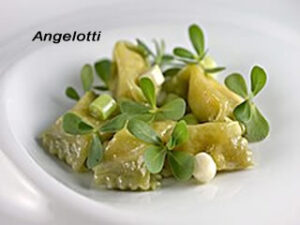


These are only of the few delights discovered in Piemonte!
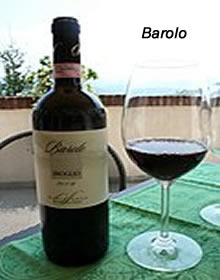
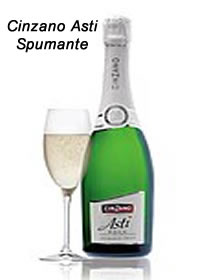
Important wines include Asti Spumonte, Nebbiola, Barolo, Dolcetto and Barbera, as well as other sweet wines. Vermouth was invented in Piemonte. Gianduiotto, traditional chocolate originated in Piemonte.. It is also known for its production of Nutella. White truffles also come from Alba in Piemonte. It has an abundant list of Museums and will be explored on other pages.
Travel by Air
- Turin Airport (TRN)– The main international airport serving Turin and the surrounding area.
- Cuneo Levaldigi Airport (CUF)– A smaller airport located near Cuneo, offering limited flights.
- Aosta Valley Airport (AOT)– A regional airport serving the Aosta Valley, primarily for seasonal flights.
- Alessandria Airport (ALF)– A general aviation airport located in Alessandria.
- Biella Airport (BIQ)– A small airport mainly used for general aviation and private flights.
- Novara Airport (NOA)– Another general aviation airport located in the Novara province.
Turin Airport (Aeroporto di Torino) also known as Turin-Caselle Airport (Aeroporto di Torino-Caselle), is an international airport (civil and military) located at CaselleTorinese, about16 kilometers (9.9 mi) north-northwest of the city of Torino. Being a small airport, it has one runway and one passenger terminal, one cargo terminal and one general aviation terminal. It is sometimes refered to as Sandro Pertini Airport (Aeroporto Sandro Pertini), for the former Italian President, Sandro Pertini.
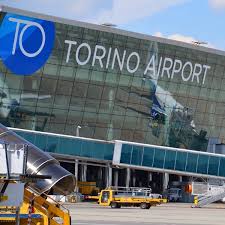
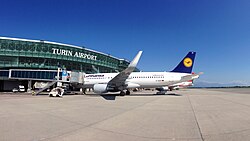
Many National and International airlines fly to this airport including Aer Lingus, Air France, British Airways, Turkish Airlines and many others, as well as intercontinental giants like Ryanair and Easy Jet. Keep in mind that some airlines operate seasonal flights to this destination.
https://www.aeroportoditorino.it/en for more information.
The airport is served by a train station on the Turin-Ceres rail line which connects it to city center in Torino.
Rail
Turin Airport Trains
There are various ways to travel to Turin Airport and an important one is by train. However, the train station is not located near the airport but is a few kilometers away, so you will need to get to the train either by car or by bus. Be sure to get to the train on time. During the peak season, trains are usually crowded. So plan to get to the train 2 hours before take off time at the airport so you don’t miss your flight.
To travel to Torino, the Turin–Ceres railway is accessible via a short walkway from the air terminal and reaches the city in 19 minutes for £3, with trains running from 5:04 am to 9:03 pm.
The overland rail link from the station adjacent to the airport complex takes passengers to the the Porta Dore Station. From there, travellers must take the DoryFly half-hourly bus, which links with the Turin Metro and overground services to the city centre at the Porta Susa Station.
Bus
There is also a shuttle bus to Turin, operated by SADEM and Flibco. Additionally, there are also some scheduled shuttle services to nearby mountain towns and resorts including Ayas, Gressoney, Champorcher, Briançon, Vallée de la Clarée (Névache), Clavière, Cesana, Puy Saint Vincent, Montgenevre, and Serre Chevalier.
The SADEM (Arriva Italia) 268 bus connects Torino Airport (TRN) to Turin city center in approximately 45–50 minutes, stopping at Porta Susa and Porta Nuova railway stations. Tickets cost €7.50, and contactless payment is available directly on board. Buses run from early morning until around midnight. Of note, Ryanair passengers are provided with a charter bus service.
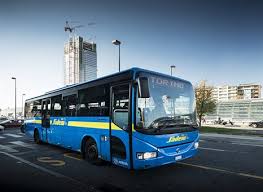
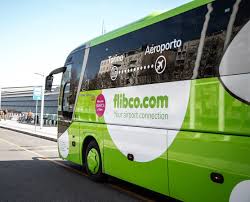
Buses are also available from Aosta and many other locations in Piedmont, while charter bus services connect the airport with the skiing resorts at the Olympic mountains.
Taxi
Metered licensed taxis are found outside the terminal’s Arrivals hall and are the easiest way to reach the city centre, taking roughly 30 minutes or more, depending on traffic conditions. Both Pronto and Radio taxis are the principal cab companies operating here. Taxis cost £30–£50 to Torino center city.
Car
Car rentals from Avis, Hertz, and Europcar are available in the arrivals hall. Passengers with reduced mobility can access assistance, bookable 48 hours in advance, with lifts and disabled parking in the multi-storey car park opposite the terminal.
If you intend to travel around the area during your stay, it might be more economical to rent a car at the Torino airport where you will find numerous car rental offices. The trip from the airport to Turin city centre takes around 30 minutes, and longer during rush hour traffic.